
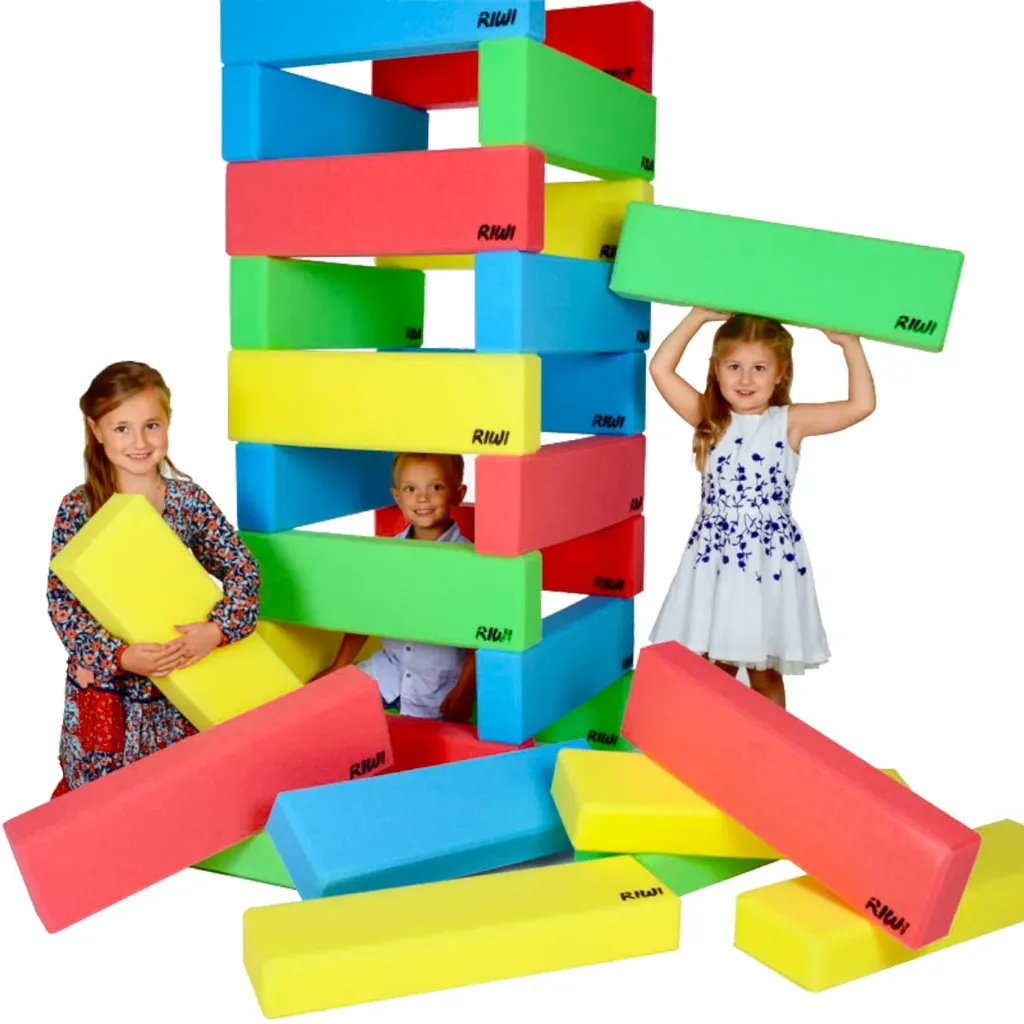
Giant Building Blocks can give children an exciting way to turn simple playtime into a world of imagination, discovery, and hands-on creativity. Giant Building Blocks allow young builders to create towers, castles, houses, forts, vehicles, and imaginative landscapes using oversized construction pieces. With Giant Building Blocks, children can enjoy screen-free entertainment while developing problem-solving, spatial awareness, coordination, and storytelling skills. For parents looking for versatile play materials, these large construction toys can provide countless opportunities for children to create something new every time they play.
Why Creativity Matters in Childhood
Creativity allows children to express ideas, explore possibilities, and discover different ways of solving problems. Open-ended activities are particularly valuable because they do not require children to follow one predetermined result.
Construction play gives children a physical way to express their imagination. Instead of simply thinking about a castle or spaceship, they can build one and turn their idea into something they can see and interact with.
Giant Building Blocks encourage this creative process by giving children flexible materials that can be arranged and rearranged repeatedly. A structure created in the morning can become something completely different in the afternoon.
Open-Ended Play Builds Confidence
When children are allowed to choose their own projects, they gain greater ownership over their play. They decide which pieces to use, how to arrange them, and when their creation is finished.
There is no requirement for every structure to look perfect. A crooked tower or unusual house can represent a child's unique way of thinking.
Parents can encourage confidence by asking children to explain their creations instead of correcting every design choice. For more information about large building blocks for kids, explore their features, benefits, age suitability, and role in encouraging imaginative and educational play.
Exploring Endless Building Possibilities
One of the most appealing aspects of large construction toys is their versatility. Children can use the same pieces to create different environments based on their current interests.
Giant Building Blocks can become a castle during one play session and a futuristic space station during another. They can also be used to build farms, schools, shops, garages, animal shelters, and miniature communities.
This variety keeps construction play interesting and encourages children to think beyond familiar designs.
Build a Fantasy Castle
A fantasy castle is an excellent project for imaginative builders. Children can construct walls, towers, gates, rooms, and other features.
Once the castle is complete, children can create a story around it. Toy figures can become characters, while stuffed animals can become magical creatures living in the kingdom.
Parents can ask questions about the castle's inhabitants and adventures, encouraging children to develop their storytelling abilities.
Create a Miniature City
Children can also design an imaginary city containing houses, shops, schools, parks, garages, and other buildings.
Giant Building Blocks make it possible to expand the city gradually. Children can begin with a single building and continue adding new areas as their ideas develop.
Toy cars and figures can become part of the city, turning construction into an extended role-playing activity.
Developing Problem-Solving Skills
Construction naturally creates challenges. Children may discover that a tower is unstable, a wall does not fit, or a planned design requires more pieces than expected.
These situations encourage children to think about possible solutions. They can rebuild, rearrange, or modify their structures until they find an approach that works.
Giant Building Blocks make trial and error enjoyable because children can quickly dismantle a design and start again.
Learning From Construction Mistakes
Mistakes can become valuable learning experiences. If a structure falls, children can examine what happened and consider how to improve it.
Parents can guide this process by asking questions such as, “What could make the bottom stronger?” or “What happens if we use a different piece here?”
This encourages independent thinking rather than simply giving children the correct answer.
Building Spatial Awareness
Spatial awareness helps children understand how objects relate to each other. Construction play provides practical opportunities to explore these relationships.
Children learn about height, width, depth, balance, position, and distance as they build.
Giant Building Blocks can make these concepts easier to understand because children can physically move large pieces and immediately observe how their choices affect a structure.
Exploring Shapes and Sizes
Different construction pieces can introduce children to basic geometric concepts. They may discover that some shapes work well as foundations while others are useful for walls, roofs, or decorative elements.
Parents can encourage children to sort pieces by shape or size before beginning a project.
This simple activity can combine organization, observation, and creative planning.
Encouraging Imaginative Storytelling
Construction and storytelling can work together to create richer play experiences. Once children build a structure, they can invent characters and events around it.
A block-built hospital can become the setting for a pretend rescue mission. A garage can become a workshop for toy vehicles, while a spaceship can become the starting point for an imaginary trip across the universe.
Giant Building Blocks provide the physical setting while children create the narrative.
Create an Adventure World
Parents can suggest a general theme without deciding the entire story. For example, ask children to create a world where animals live in special buildings.
Children can decide which animals live there, what their homes look like, and what adventures happen throughout the imaginary environment.
This approach gives children enough structure to begin while preserving freedom for original ideas.
Supporting Independent Play
Children do not always need an adult to direct their activities. Once they understand how construction materials work, they can develop their own projects.
Giant Building Blocks allow children to experiment independently. They can choose a project, gather materials, build a structure, and modify it according to their ideas.
Parents can remain available for support while allowing children to take responsibility for the creative process.
Give Children Time to Experiment
Creativity often takes time. Children may build something, stop, think, and then return with a new idea.
Avoid rushing them to finish. Allowing children to leave an unfinished structure and return to it later can encourage longer-term creative thinking.
A project can evolve naturally as children discover new possibilities.
Family and Group Construction Activities
Building can become even more enjoyable when siblings, friends, or parents participate. Group construction gives children opportunities to communicate and cooperate.
Giant Building Blocks can support collaborative projects because different participants can work on separate sections of a larger structure.
One child might create a tower while another builds the entrance. A parent can help with planning without taking control of the entire project.
Cooperative Building Challenges
Families can create shared challenges such as building a miniature town, designing an indoor zoo, or constructing a large pretend transportation center.
Instead of focusing on competition, encourage everyone to contribute to one finished project.
Children can discuss ideas, share pieces, solve disagreements, and celebrate the final creation together.
Combining Construction With Learning
Construction activities can complement learning in many ways. Parents and educators can introduce counting, shape recognition, measurement, storytelling, and basic engineering concepts during play.
Children can count how many pieces they use, compare the height of different towers, or draw pictures of their completed structures.
Giant Building Blocks make these learning experiences hands-on and interactive rather than purely theoretical.
Early STEM Exploration
Building can introduce simple STEM concepts such as balance, structure, cause and effect, and spatial relationships.
Children do not need formal lessons to explore these ideas. They naturally discover them while testing different designs.
This makes construction play a practical way to combine education with entertainment.
Creating a Creative Play Environment
The environment can influence how freely children explore. Choose an open area where children have enough room to build and move around their structures.
Keep building materials accessible so children can select pieces independently.
Giant Building Blocks should be stored in a suitable location after play. Organized storage helps children find what they need and makes cleanup easier.
Encourage Regular Building Sessions
Creativity develops through repeated practice. A child may create simple structures at first and gradually become more ambitious.
Regular access to construction materials allows children to revisit old ideas, improve previous designs, and experiment with new concepts.
Parents can occasionally introduce new themes to keep the activity fresh.
Frequently Asked Questions
1. What are Giant Building Blocks used for?
Giant Building Blocks can be used to create towers, castles, houses, forts, cities, vehicles, animal shelters, and many other imaginative structures.
2. How do building blocks encourage creativity?
They provide open-ended materials that children can arrange in countless ways. Children make their own decisions about designs, structures, themes, and stories.
3. Can construction play support child development?
Yes. Building activities can encourage problem-solving, spatial awareness, coordination, planning, persistence, communication, and imaginative thinking.
4. Can children play with large building blocks independently?
Yes, when the materials are appropriate for their age and the play environment is suitable. Independent construction gives children opportunities to make decisions and explore ideas at their own pace.
5. How can parents make building play more interesting?
Parents can introduce themes, storytelling prompts, family challenges, or new construction goals. Adding suitable toy figures, vehicles, or stuffed animals can also expand imaginative possibilities.
Conclusion
Children's creativity grows when they have opportunities to explore ideas freely and turn imagination into something tangible. Giant Building Blocks provide a flexible foundation for this kind of hands-on play, allowing children to build and rebuild countless imaginative creations.
From fantasy castles and miniature cities to animal habitats and futuristic spaceships, every construction session can become a new adventure. Children can experiment with shapes, structures, stories, and solutions while developing valuable cognitive and social skills.
Giant Building Blocks also encourage family participation, making them useful for shared activities where parents and children can collaborate on creative projects.
The most important part of construction play is not producing a perfect structure. It is giving children the freedom to experiment, make decisions, learn from mistakes, and express their own ideas. With time, encouragement, and suitable materials, Giant Building Blocks can help turn everyday play into an ongoing journey of imagination and endless creativity.